
 CamsAhead.com
Facial recognition cameras: official records and the law in each state
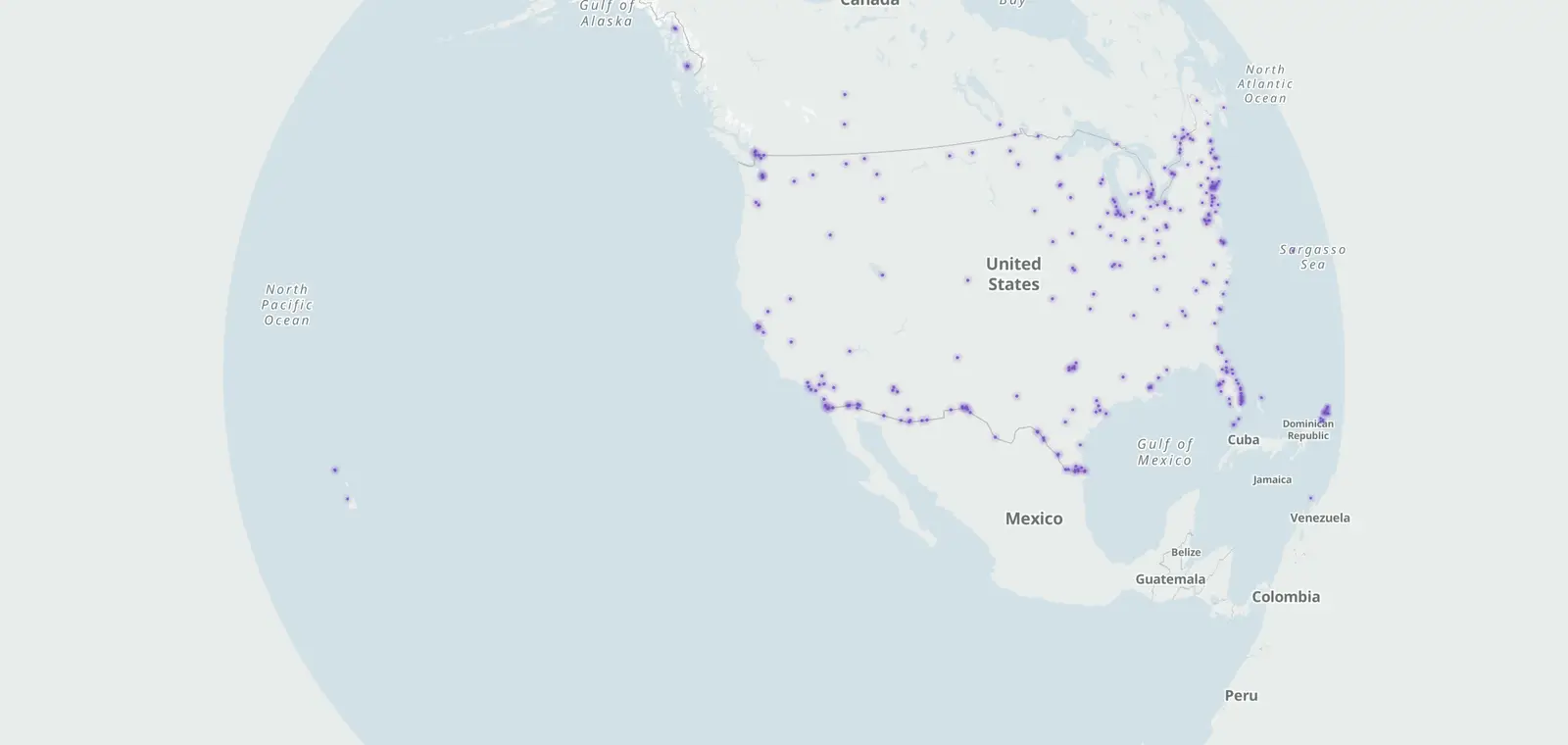
343 CBP sites with face comparison, 7 airports in Japan and 18 dated UK deployments.
© OpenStreetMap contributors (ODbL) · © OpenMapTiles
Official records confirm face recognition at 343 airports, land crossings and seaports (CBP), at 7 airports in Japan and in 18 dated UK immigration deployments at Holyhead, as of October 28, 2026. Each entry is Official, confirmed, with its date. 15 US states have a verified law, rule or court ruling on police use, each quoted below.
License plate readers are not face recognition: they read plates, not faces. See plate readers.
- US airports, land crossings and seaports Official, confirmed · CBP lists read Oct 28, 2026343
- Japan airports with face gates Official, confirmed7
- UK dated deployments Nov 10, 2025 to Feb 26, 202618
US airports, land crossings and seaports
CBP lists 238 airports with face comparison (57 of them on departure too), 70 land crossings and 35 seaports. Each is Official, confirmed, from CBP's lists as read on October 28, 2026. US citizens can ask a CBP officer for a manual document check.
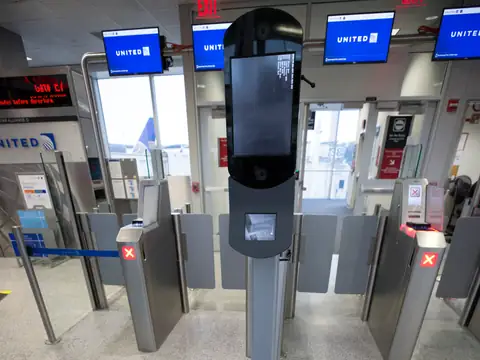
Japan: face recognition gates at 7 airports
Japan's Immigration Services Agency lists these airports with face recognition gates (FY2019 and FY2020 gate lists). Newer gates reported in the news are not counted.
| Airport | Code |
|---|---|
| New Chitose Airport (新千歳) | CTS |
| Fukuoka Airport (福岡) | FUK |
| Haneda Airport (羽田) | HND |
| Kansai Airport (関西) | KIX |
| Chubu Centrair Airport (中部) | NGO |
| Narita Airport (成田) | NRT |
| Naha Airport (那覇) | OKA |
United Kingdom: dated deployments
The Home Office (Immigration Enforcement) published 18 facial recognition deployments between November 10, 2025 and February 26, 2026, each at Holyhead, with up to 2 cameras. Across them, 10,264 faces were seen, with 2 correct alerts, 0 incorrect alerts and 3 arrests.
| Date | Cameras | Watchlist | Faces seen | Correct alerts | Incorrect alerts | Arrests |
|---|---|---|---|---|---|---|
| Nov 10, 2025 to Nov 12, 2025 | 1 | 1,942 | 2,038 | 0 | 0 | 0 |
| Nov 27, 2025 | 2 | 4,867 | 1,083 | 0 | 0 | 0 |
| Nov 27, 2025 | 2 | 4,867 | 450 | 1 | 0 | 0 |
| Nov 28, 2025 | 2 | 4,867 | 144 | 0 | 0 | 0 |
| Nov 28, 2025 | 2 | 4,868 | 2,214 | 1 | 0 | 1 |
| Nov 28, 2025 | 2 | 4,867 | 523 | 0 | 0 | 0 |
| Nov 29, 2025 | 2 | 4,867 | 233 | 0 | 0 | 0 |
| Nov 29, 2025 | 2 | 4,867 | 827 | 0 | 0 | 0 |
| Feb 24, 2026 | 1 | 6,535 | 336 | 0 | 0 | 0 |
| Feb 24, 2026 | 1 | 6,535 | 653 | 0 | 0 | 0 |
| Feb 24, 2026 | 1 | 6,535 | 131 | 0 | 0 | 0 |
| Feb 25, 2026 | 1 | 6,535 | 92 | 0 | 0 | 0 |
| Feb 25, 2026 | 1 | 6,535 | 356 | 0 | 0 | 1 |
| Feb 25, 2026 | 1 | 6,535 | 397 | 0 | 0 | 1 |
| Feb 25, 2026 | 1 | 6,535 | 136 | 0 | 0 | 0 |
| Feb 26, 2026 | 1 | 6,535 | 75 | 0 | 0 | 0 |
| Feb 26, 2026 | 1 | 6,535 | 235 | 0 | 0 | 0 |
| Feb 26, 2026 | 1 | 6,535 | 341 | 0 | 0 | 0 |
Facial recognition laws by state
15 states have a verified law, rule or court ruling on police use of face recognition. Each row says what its text does, quotes it where it was read, and gives the day it was checked.
How to read the table
Verified: the official text, or a court's or agency's official page, was read, and the quote comes from it.
Secondary: a rule exists, but only secondary sources or another official document were read.
No law found: no statute on police or government face recognition turned up in the search.
Unverified: nothing reliable was read, so the row only says that.
| State | What the text does | Status | Checked |
|---|---|---|---|
| Alabama Act 2022-420 (SB 56, 2022) per LegiScan; codified section not read | A match alone is not enough Police may not use a face-recognition match as the only basis for probable cause or an arrest; other lawfully obtained evidence is needed. The textA state or local law enforcement agency may not use facial recognition technology match results as the sole basis to establish probable cause in a criminal investigation or to make an arrest. Section 2(a), House Judiciary Committee substitute for SB56 (217323-2), Alabama Legislature site | Secondary | |
| Alaska no state law found | No law found No state statute on police or government face recognition was found. | No law found | |
| Arizona no state law found | No law found No state statute on police or government face recognition was found. | No law found | |
| Arkansas no state law found | No law found No state statute on police or government face recognition was found. | No law found | |
| California No current statute found. Penal Code § 832.19 (AB 1215, 2019) barred face recognition on police body cameras and expired Jan 1, 2023 (secondary) | No law found No current state rule on police face recognition was found; the 2019 body-camera ban expired at the start of 2023. | No law found | |
| Colorado C.R.S. §§ 24-18-301 to -309 (SB 22-113, 2022) | Warrant or court orderA match alone is not enoughReporting duty Agencies must file a notice of intent and a public accountability report, test the service, train users and keep records; police need a warrant, probable cause, a lead-development need or a court order for ongoing surveillance or identification as it happens, and a match cannot be the only basis for probable cause. The textA LAW ENFORCEMENT AGENCY SHALL NOT USE THE RESULTS OF A FACIAL RECOGNITION SERVICE AS THE SOLE BASIS TO ESTABLISH PROBABLE CAUSE IN A CRIMINAL INVESTIGATION. | Verified | |
| Connecticut no state law found | No law found No state statute on police or government face recognition was found. | No law found | |
| Delaware no state law found | No law found No state statute on police or government face recognition was found. | No law found | |
| District of Columbia no state law found | No law found No state statute on police or government face recognition was found. | No law found | |
| Florida no state law found | No law found No state statute on police or government face recognition was found. | No law found | |
| Georgia no state law found | No law found No state statute on police or government face recognition was found. | No law found | |
| Hawaii no state law found | No law found No state statute on police or government face recognition was found. | No law found | |
| Idaho no state law found | No law found No state statute on police or government face recognition was found. | No law found | |
| Illinois 625 ILCS 5/6-110.1(b) (Secretary of State face searches; immigration limit) | Partial ban The Secretary of State may not give face-recognition searches or licence photos to any agency to enforce federal immigration law; requests about other crimes are not covered. The textThe Secretary of State shall not provide facial recognition search services or photographs obtained in the process of issuing a driver's license or permit to any federal, State, or local law enforcement agency or other governmental entity for the purpose of enforcing federal immigration laws. | Verified | |
| Illinois (police drones) 725 ILCS 167/17 (Freedom from Drone Surveillance Act; P.A. 103-101, 2023-06-16) | Partial ban Per a search result relayed by the review (not read): police drones may not use onboard face recognition in flight, and drone footage may not be run through face recognition except for a terror threat or imminent harm. | Secondary (search result) | |
| Indiana no state law found | No law found No state statute on police or government face recognition was found. | No law found | |
| Iowa no state law found | No law found No state statute on police or government face recognition was found. | No law found | |
| Kansas no state law found | No law found No state statute on police or government face recognition was found. | No law found | |
| Kentucky no state law found | No law found No state statute on police or government face recognition was found. | No law found | |
| Louisiana no state law found | No law found No state statute on police or government face recognition was found. | No law found | |
| Maine 25 M.R.S. § 6001 (PL 2021, c. 394) | Ban or pause Bans state, county and local government from using face recognition, except that officials may ask the Bureau of Motor Vehicles (or the FBI or another state through State Police) for a search when there is probable cause that an unidentified person in an image committed a serious crime, or to identify a dead, missing or endangered person. The textExcept as provided in paragraphs B and D, a department, public employee or public official may not: (1) Obtain, retain, possess, access, request or use a facial surveillance system or information derived from a search of a facial surveillance system; | Verified | |
| Maryland Md. Code, Crim. Proc. §§ 2-501 to 2-510 (2024; SB 182 / HB 338 per trackers) | Partial banA match alone is not enoughReporting duty Police may use face recognition only for listed serious crimes and some safety purposes; results cannot be the only basis for probable cause or identification and may not be used as trial evidence except for a warrant or a preliminary hearing; agencies must audit and publish yearly reports. The textSubject to subparagraph (ii) of this paragraph, results generated by facial recognition technology may not serve as the sole basis to establish probable cause or the positive identification of an individual in a criminal investigation or proceeding. | Verified | |
| Massachusetts G.L. c. 6, § 220 (St. 2020, c. 253) | Partial banWarrant or court orderReporting duty Police face-recognition searches may be run only by written request to the Registry of Motor Vehicles, State Police or FBI, to carry out a court order based on specific and articulable facts giving reasonable grounds, or without an order to identify a dead person or in an emergency; every search is documented quarterly and published each year. The textAny law enforcement agency performing or requesting a facial recognition search using facial recognition technology shall only do so through a written request submitted to the registrar of motor vehicles, the department of state police or the Federal Bureau of Investigation. | Verified | |
| Michigan no state law found | No law found No state statute on police or government face recognition was found. | No law found | |
| Minnesota Minn. Stat. § 626.19, subd. 4(b) (police drones) | Warrant or court order Police may not fly a drone with face recognition or other biometric matching unless a warrant expressly allows it. The textA law enforcement agency must not deploy a UAV with facial recognition or other biometric-matching technology unless expressly authorized by a warrant. | Verified | |
| Mississippi no state law found | No law found No state statute on police or government face recognition was found. | No law found | |
| Missouri no state law found | No law found No state statute on police or government face recognition was found. | No law found | |
| Montana MCA §§ 44-15-101 to -112 (Facial Recognition for Government Use; L. 2023, ch. 781) | Ban or pauseWarrant or court orderA match alone is not enoughReporting duty Bans continuous facial surveillance and most government face recognition; police may search with a warrant to investigate a serious crime, with a court order to find a missing person or identify a dead one, or in an emergency with a warrant obtained within 24 hours; a match cannot be the only basis for probable cause, and meaningful human review is required before an adverse decision. The textExcept as provided in subsection (5), a law enforcement agency shall obtain a warrant prior to performing a search using facial recognition technology under subsection (2). | Verified | |
| Nebraska no state law found | No law found No state statute on police or government face recognition was found. | No law found | |
| Nevada no state law found | No law found No state statute on police or government face recognition was found. | No law found | |
| New Hampshire RSA 105-D:2, XII (police body cameras) | Partial ban Bars running police body-camera recordings through automated analysis, including face recognition. The textExcept as authorized in this section, no person, including without limitation officers and their supervisors, shall edit, alter, erase, delete, duplicate, copy, subject to automated analysis or analytics of any kind, including but not limited to facial recognition technology, share, display, or otherwise distribute in any manner any BWC recordings or portions thereof. | Verified | |
| New Jersey No statute found; court ruling: State v. Miles, N.J. Supreme Court, A-41-24 (decided June 24, 2026), refining State v. Arteaga (App. Div. 2023) | A court decision, not a statute: a defendant identified with face recognition gets discovery case by case; the State must disclose which face-recognition tools it used and how, but source code was not ordered at this stage. The textThe Court disagrees with a mechanical application of Arteaga to all cases involving FRT; a defendant’s entitlement varies depending on the specifics of the case. Here, the State must produce: (1) discovery identifying the FRT tools and materials the State used in its investigation; and (2) discovery related to how the State utilized those FRT tools and materials to prosecute defendant. State v. Miles (A-41-24), syllabus, HELD paragraph (the syllabus is not part of the Court’s opinion) | Verified | |
| New Mexico no state law found | No law found No state statute on police or government face recognition was found. | No law found | |
| New York no state law found | No law found No state statute on police or government face recognition was found. | No law found | |
| North Carolina no state law found | No law found No state statute on police or government face recognition was found. | No law found | |
| North Dakota no state law found | No law found No state statute on police or government face recognition was found. | No law found | |
| Ohio no state law found | No law found No state statute on police or government face recognition was found. | No law found | |
| Oklahoma no state law found | No law found No state statute on police or government face recognition was found. | No law found | |
| Oregon ORS 133.741(1) (police body-camera policies) | Partial ban Police body-camera policies must ban using face recognition or other biometric matching to analyse the recordings. The textA prohibition on the use of facial recognition or other biometric matching technology to analyze recordings obtained through the use of the camera. | Verified | |
| Pennsylvania no state law found | No law found No state statute on police or government face recognition was found. | No law found | |
| Rhode Island no state law found | No law found No state statute on police or government face recognition was found. | No law found | |
| South Carolina no state law found | No law found No state statute on police or government face recognition was found. | No law found | |
| South Dakota no state law found | No law found No state statute on police or government face recognition was found. | No law found | |
| Tennessee no state law found | No law found No state statute on police or government face recognition was found. | No law found | |
| Texas Tex. Bus. & Com. Code § 552.054(b) (HB 149, 2025, Texas Responsible Artificial Intelligence Governance Act), effective Jan 1, 2026 | A narrow limit, not a ban: a governmental entity may not build or use an AI system to uniquely identify a person from biometric data or from images gathered online without consent, if that would infringe the person's rights; the Act's 'biometric data' excludes photographs and video. The textA governmental entity may not develop or deploy an artificial intelligence system for the purpose of uniquely identifying a specific individual using biometric data or the targeted or untargeted gathering of images or other media from the Internet or any other publicly available source without the individual's consent, if the gathering would infringe on any right of the individual under the United States Constitution, the Texas Constitution, or state or federal law. § 552.054(b), HB 149 enrolled text (Texas Legislature Online) | Verified | |
| Utah Utah Code 77-23e (SB 34, 2021) and 77-23d-106 (SB 231, 2024, effective May 1, 2024) | Partial banWarrant or court order Only police may ask for a face-recognition comparison against a government image database, in writing with a case number, and only for a felony, violent crime, threat to life or to identify a dead or incapacitated person; since May 2024 a government entity also needs a search warrant and a public written policy to obtain biometric surveillance information, with exceptions. The textExcept as provided in Subsection (2), a government entity may not obtain biometric surveillance information without: (a) a search warrant; and | Verified | |
| Vermont 2020 Acts and Resolves No. 166, Sec. 14 (uncodified moratorium); 2021 Acts and Resolves No. 17 (exception) | Ban or pause Moratorium: police may not use face recognition until the legislature authorizes it, except where the drone law would allow it; since 2021 it is allowed in child sexual exploitation investigations to search media police lawfully seized. The textUntil the use of facial recognition technology by law enforcement officers is authorized by an enactment of the General Assembly, a law enforcement officer shall not use facial recognition technology or information acquired through the use of facial recognition technology unless the use would be permitted with respect to drones under 20 V.S.A. § 4622 (law enforcement use of drones). | Verified | |
| Virginia Va. Code § 15.2-1723.2 (local police) and § 23.1-815.1 (campus police), versions effective July 1, 2026; § 52-4.5 (State Police) expired July 1, 2026 | Ban or pauseWarrant or court order From July 1, 2026 the official code shows the 2021 rule again: local and campus police may not buy or deploy face recognition unless a statute expressly authorizes it, and such a statute must make the data reachable only by a search warrant; the 2022 authorised-use rules, including the State Police section, expired on July 1, 2026. The textNo local law-enforcement agency shall purchase or deploy facial recognition technology unless such purchase or deployment of facial recognition technology is expressly authorized by statute. | Verified | |
| Washington RCW 43.386 (SB 6280, 2020 c 257) | Warrant or court orderReporting duty Agencies must publish an accountability report, test, train and use meaningful human review; police need a warrant (or exigent circumstances, or a court order for missing or dead persons) for ongoing surveillance, identification as it happens or persistent tracking, and may not target people for protected traits or activities. The textA state or local government agency may not use a facial recognition service to engage in ongoing surveillance, conduct real-time or near real-time identification, or start persistent tracking unless: (a) A warrant is obtained authorizing the use of the service for those purposes; (b) Exigent circumstances exist; or (c) A court order is obtained authorizing the use of the service for the sole purpose of locating or identifying a missing person, or identifying a deceased person. | Verified | |
| West Virginia no state law found | No law found No state statute on police or government face recognition was found. | No law found | |
| Wisconsin no state law found | No law found No state statute on police or government face recognition was found. | No law found | |
| Wyoming no state law found | No law found No state statute on police or government face recognition was found. | No law found |
Cities and counties with their own rules
| Place | What the text does | Status | Checked |
|---|---|---|---|
| San Francisco, CA S.F. Administrative Code (2019 'Stop Secret Surveillance' ordinance; chapter 19B per press); amended April 2025 | Ban or pause City departments may not use face recognition; an April 2025 amendment restated the ban and added devices or software with face-recognition parts. | Secondary | |
| Oakland, CA Oakland Municipal Code ch. 9.64, amended by ordinance, File 18-1891 (final passage Sept 17, 2019) | Ban or pause The city may not acquire or use face recognition technology. The textAdopt An Ordinance Amending Oakland Municipal Code Chapter 9.64 To Prohibit The City Of Oakland From Acquiring And/Or Using Face Recognition Technology | Secondary | |
| Berkeley, CA Berkeley Municipal Code ch. 2.99, amended Oct 15, 2019 (council item 24) | Ban or pause The city manager and staff may not obtain, request or use face recognition or information from it. The textit shall be a violation of this Ordinance for the City Manager or any person acting on the City Manager’s behalf to obtain, retain, request, access, or use: i) any Face Recognition Technology; or ii) any information obtained from Face Recognition Technology | Secondary | |
| Boston, MA City of Boston Code § 16-62 (Docket #0683, 2020) per search results; ordinance text read | Ban or pause The city and its officials may not obtain or use face surveillance or information from it, or let a third party do so for them; evidence about a specific crime is allowed if the city did not ask for it. The textIt shall be unlawful for Boston or any Boston official to: a. obtain, retain, possess, access, or use (i) any face surveillance system, or (ii) information derived from a face surveillance system; Ordinance text, Boston City Council face surveillance ban (city PDF) | Secondary | |
| Portland, OR (city bureaus) Ordinance 190113 (2020) | Ban or pause City bureaus, including police, may not acquire or use face recognition. The textThis Ordinance prohibits the use of Face Recognition Technologies by all City of Portland bureaus. | Secondary | |
| Portland, OR (private places of public accommodation) Portland City Code ch. 34.10 (Prohibit the use of Face Recognition Technologies by Private Entities in Places of Public Accommodation) | Ban or pause Private businesses may not use face recognition in places open to the public, such as shops and restaurants, within the city, with listed exceptions. The textExcept as provided in the Exceptions section below, a Private Entity shall not use Face Recognition Technologies in Places of Public Accommodation within the boundaries of the City of Portland. | Verified | |
| Minneapolis, MN Minneapolis Code ch. 41, new Article II (§§ 41.100-41.180), adopted 2021 per the draft and search results | Ban or pause City bans its own use of face recognition (draft text; final text not read). | Secondary | |
| King County, WA King County Ordinance 19296 (passed June 1, 2021; new chapter in K.C.C. Title 2) | Ban or pause County offices and executive departments, including the sheriff (department of public safety), may not obtain or use face recognition or its results. The textIt shall be unlawful for any King County administrative office or executive department to: a. obtain, retain, possess, access or use: (1) any facial recognition technology; or (2) any facial recognition information; | Secondary | |
| Madison, WI Madison General Ordinances § 23.63 'Banning the Use of Face Surveillance Technology' (proposed Dec 2020, per a search result for an ACLU of Wisconsin letter) | Ban or pause City ban on face surveillance (secondary; text not read). | Secondary | |
| Jackson, MS 2020 city ordinance banning police face recognition | The 2020 ban on police face recognition was repealed in February 2025. | Secondary | |
| New Orleans, LA Ordinance 33021 (Dec 2020 ban); Surveillance Technology and Data Protection Ordinance (July 2022) and a guardrails ordinance (Aug 2022) | The 2020 ban was reversed in 2022: police may use face recognition to investigate listed violent crimes, with guardrails but no judge approval. | Secondary | |
| Pittsburgh, PA Pittsburgh Code § 116.15 (File 2020-0647, Enactment #31, Sept 22, 2020) | Ban or pause The police department may not use face recognition or predictive policing without City Council approval. The textThe Department of Public Safety shall not obtain, retain, access, or use Facial Recognition Technology or Predictive Policing Technology, or make use of information collected, captured, recorded, retained, processed, intercepted, analyzed, derived, or effected through the use of Select Surveillance Technology by another entity without the approval of City Council, or unless permitted through the stipulations of this Ordinance. | Secondary | |
| Somerville, MA City ordinance (text not read) | Ban or pause City ban on government face recognition (secondary). | Secondary | |
| Cambridge, MA City ordinance (text not read) | Ban or pause City ban on government face recognition (secondary). | Secondary | |
| Brookline, MA City ordinance (text not read) | Ban or pause City ban on government face recognition (secondary). | Secondary | |
| Northampton, MA City ordinance (text not read) | Ban or pause City ban on government face recognition (secondary). | Secondary | |
| Springfield, MA City ordinance (text not read) | Ban or pause City ban on government face recognition (secondary). | Secondary | |
| Portland, ME City ordinance (text not read) | Ban or pause City ban on government face recognition (secondary). | Secondary | |
| Santa Cruz, CA City ordinance (text not read) | Ban or pause City ban on government face recognition (secondary). | Secondary | |
| Buenos Aires (City), Argentina Sistema de Reconocimiento Facial de Prófugos (SRFP), Resolución 398/19; court case ODIA y otros c/ GCBA s/ amparo | Ban or pause A city court declared the way the fugitive face-recognition system was set up unconstitutional; the appeals chamber confirmed it and tied any restart to working oversight bodies and software tests. | Secondary |
Federal rules
| Rule | What the text does | Status | Checked |
|---|---|---|---|
| United States (federal statute) no federal statute found | No law found No federal statute regulates police or agency use of face recognition; agency programmes rest on general immigration and security powers and on agency rules. | No law found | |
| US CBP: entry and exit photographs (8 CFR 235.1(f)(1)(ii), 215.8(a)(1)) 8 CFR 235.1(f)(1)(ii) and 215.8(a)(1), as revised by the final rule 'Collection of Biometric Data From Aliens Upon Entry to and Departure From the United States', 90 FR 48604 (published 2025-10-27, effective 2025-12-26) | DHS may photograph any non-citizen entering or leaving the United States to confirm identity. The revised regulation text says nothing on citizens; the rule's preamble and CBP's page say U.S. citizens take part voluntarily and may opt out. Since December 26, 2025 The text(ii) Photographs. DHS may require an alien seeking admission to be photographed to determine the alien's identity or for other lawful purposes. 8 CFR 235.1(f)(1)(ii) as revised, regulatory text in the final rule (GPO govinfo) | Verified | |
| US CBP: traveller opt-out (agency page) CBP Biometrics privacy policy page (agency guidance, not a regulation) | CBP says U.S. citizens who do not want a face photo may ask for a manual document check by an officer. The textU.S. citizens who do not wish to submit to facial photo capture pursuant to these processes may request alternative processing, which typically involves a manual review of their travel documents by a CBP Officer. | Verified | |
| US TSA: checkpoint facial comparison (agency page) No regulation found; TSA Biometrics Technology page (agency guidance) | TSA says face comparison at checkpoints is voluntary and a traveller can ask for the standard ID check instead. The textNo. Facial comparison technology is voluntary. Tell a TSA officer if you do not wish to participate. The officer will use the standard ID verification process. | Verified |
Other countries
| Country | What the text does | Status | Checked |
|---|---|---|---|
| European Union: AI Act Art. 5(1)(h) Regulation (EU) 2024/1689 (AI Act), Art. 5(1)(h), as amended by Regulation (EU) 2026/1744 (Art. 5(1)(h) and 5(2)-(7) unchanged) | Ban or pauseWarrant or court order Bans police use of remote biometric identification as it happens in public spaces except when strictly necessary to search for victims or missing persons, prevent an imminent threat or terror attack, or find suspects of listed serious crimes. Since February 2, 2025 The text(h) the use of ‘real-time’ remote biometric identification systems in publicly accessible spaces for the purposes of law enforcement, unless and in so far as such use is strictly necessary for one of the following objectives: | Verified | |
| European Union: AI Act Art. 5(2)-(7) Regulation (EU) 2024/1689, Art. 5(2)-(7), as amended by Regulation (EU) 2026/1744 (Art. 5(1)(h) and 5(2)-(7) unchanged) | Warrant or court orderA match alone is not enoughReporting duty Each such use needs prior approval by a court or an independent authority with binding decisions; use is possible only where a Member State passes national rules allowing it; national authorities report yearly to the Commission, which publishes yearly reports; no adverse decision may rest only on the system output. Since February 2, 2025 The texteach use for the purposes of law enforcement of a ‘real-time’ remote biometric identification system in publicly accessible spaces shall be subject to a prior authorisation granted by a judicial authority or an independent administrative authority whose decision is binding of the Member State in which the use is to take place | Verified | |
| European Union: GDPR Art. 9 Regulation (EU) 2016/679 (GDPR), Art. 9(1) | Ban or pause Processing biometric data to uniquely identify a person is prohibited unless an exception in Art. 9(2) applies; this is the base rule for private and non-police face recognition. The textProcessing of personal data revealing racial or ethnic origin, political opinions, religious or philosophical beliefs, or trade union membership, and the processing of genetic data, biometric data for the purpose of uniquely identifying a natural person, data concerning health or data concerning a natural person's sex life or sexual orientation shall be prohibited. | Verified | |
| European Union: Law Enforcement Directive Art. 10 Directive (EU) 2016/680, Art. 10 | Police may process biometric data to identify a person only where strictly necessary, with safeguards, and only on the grounds the article lists, the first being authorisation by Union or national law. The textbiometric data for the purpose of uniquely identifying a natural person, data concerning health or data concerning a natural person's sex life or sexual orientation shall be allowed only where strictly necessary, subject to appropriate safeguards for the rights and freedoms of the data subject, and only: (a) where authorised by Union or Member State law | Verified | |
| United Kingdom: R (Bridges) v Chief Constable of South Wales Police No specific statute; R (Bridges) v CC South Wales Police [2020] EWCA Civ 1058 (11 Aug 2020) | The Court of Appeal held South Wales Police's live face recognition was not 'in accordance with the law' because the rules left officers too much discretion over who goes on a watchlist and where it is used. The textThe Respondent’s use of Live Automated Facial Recognition technology on 21 December 2017 and 27 March 2018 and on an ongoing basis, which engaged Article 8(1) of the European Convention on Human Rights, was not in accordance with the law for the purposes of Article 8(2). | Verified | |
| United Kingdom: Home Office legal framework (2025-2026) No statute or bill; Home Office consultation 'Legal framework for using facial recognition in law enforcement' (4 Dec 2025 - 12 Feb 2026), no response published | The government says police have a legal basis but the framework is complicated, and it consulted on a new statutory framework; as of 2026-10-27 the consultation shows as closed with no published outcome and no bill was found. The textAlthough there is a legal basis for police use of facial recognition, the current legal framework is complicated, inflexible and difficult to understand, which in turn limits the extent to which facial recognition and similar technologies can be confidently rolled out. Home Office, Police use of facial recognition: factsheet (gov.uk) | Verified | |
| Canada No face-recognition statute found; Privacy Act s. 4 applied in the Privacy Commissioner's RCMP/Clearview AI finding (June 10, 2021) | No specific law; the federal Privacy Commissioner found the RCMP broke the Privacy Act by collecting personal information from Clearview AI. The textNow, in our investigation of the RCMP, we found that Canada’s national police force contravened the Privacy Act, which applies to federal government institutions, when it collected personal information from Clearview AI. | Verified | |
| Australia Identity Verification Services Act 2023 (Cth), No. 115 of 2023 | Partial ban Sets rules for government face-matching services; one-to-many face identification is allowed only to protect people with assumed identities (such as undercover officers), so general one-to-many searches are not authorised under it. The textFIS is the only kind of 1:many matching service that is permitted under this Act. | Verified | |
| India no face-recognition statute found (not verified) | No specific law found; this was not verified. | Unverified | |
| Brazil no face-recognition statute found (not verified); lead: Lei 13.709/2018 (LGPD), not read | Not verified. Lead to check: whether the general data law (LGPD) excludes public-security processing and how it treats biometrics. | Unverified | |
| Argentina (national) no national face-recognition statute found (not verified) | No national law found; see the Buenos Aires city row for the court rulings. | Unverified | |
| Russia no face-recognition statute found (not verified); Glukhin v. Russia, ECtHR no. 11519/20 (4 July 2023) | No specific law found; the European Court of Human Rights found Russia violated the rights to private life and free expression when Moscow metro face recognition was used against a lone protester. | Unverified | |
| China: Personal Information Protection Law Art. 26 Personal Information Protection Law (2021), Art. 26 (and Art. 28: biometrics are sensitive) | Cameras and identity-recognition devices in public places must be needed for public safety, follow state rules and carry clear signs; the images may be used only for public safety unless the person separately consents. The text在公共场所安装图像采集、个人身份识别设备,应当为维护公共安全所必需,遵守国家有关规定,并设置显著的提示标识。所收集的个人图像、身份识别信息只能用于维护公共安全的目的,不得用于其他目的;取得个人单独同意的除外。 | Verified | |
| China: Face Recognition Measures (2025) 人脸识别技术应用安全管理办法 (Measures for the Security Management of Face Recognition Technology Applications), CAC and Ministry of Public Security, in force June 1, 2025 | Partial ban Face-recognition devices in public places must be needed for public safety, cover a reasonable area and carry clear signs; none inside hotel rooms, bathrooms, changing rooms or toilets; face recognition may not be the only way to verify identity where other methods exist. Since June 1, 2025 | Verified |
What this page does not show
- Whether a camera is on today: each record is past and dated.
- Points that volunteers tagged: none is checked yet.
- Stores, stadiums and other private places.
- Pictures of any camera.
Questions about facial recognition cameras
Where is facial recognition officially confirmed?
On CBP's lists of 238 airports, 70 land crossings and 35 seaports, Japan's list of 7 airports with face recognition gates, and the Home Office's 18 dated deployments at Holyhead. Each is a past, dated record, not a claim that a camera is on today.
Can I decline facial recognition at the airport?
CBP says US citizens may ask for a manual document check, and TSA says its checkpoint face check is voluntary. The wording of each is on how to ask for a manual check.
Which states ban police facial recognition?
The table marks each state whose text bans or pauses government use with "Ban or pause". Each row says whether its text was read in full (Verified) or only in secondary sources.
Which cities have banned facial recognition?
20 city and county rows are in the city table, each with its status. Some bans were later changed; the row says so.
Does a facial recognition match count as probable cause?
Not in the states marked "A match alone is not enough": there, a match needs other evidence before an arrest. The quote in each row gives the law's words.
Are plate readers facial recognition?
No. A plate reader reads number plates, not faces. See license plate readers.
Where can I see a facial recognition camera?
This page lists where an official body has confirmed face recognition, with the date of each record. It shows no pictures and no camera positions beyond the airport, port or crossing.
Sources and updates
- U.S. Customs and Border Protection: Airports with CBP biometric facial comparison (entry, exit, TSA gates); US federal government work (public domain, 17 U.S.C. 105)
- U.S. Customs and Border Protection: Land border ports with CBP biometric facial comparison; US federal government work (public domain, 17 U.S.C. 105)
- U.S. Customs and Border Protection: Seaports with CBP biometric facial comparison (cruise debarkation); US federal government work (public domain, 17 U.S.C. 105)
- Immigration Services Agency of Japan (Ministry of Justice): Japan Immigration Services Agency face recognition gates (airports), FY2019 and FY2020 gate lists; 出典:出入国在留管理庁ホームページ (Source: Immigration Services Agency of Japan website), Public Data License 1.0
- Home Office (Immigration Enforcement): Immigration Enforcement live facial recognition deployment records (CSV); Home Office. Contains public sector information licensed under the Open Government Licence v3.0.
- CamsAhead law table: 90 jurisdictions, each text read and quoted on October 27, 2026; the source of each row is linked in the row
Cite this page: “Facial Recognition Cameras: Official Records, Laws by State”, CamsAhead.com, https://camsahead.com/facial-recognition-cameras/, updated October 28, 2026.
How CamsAhead counts cameras · Report a problem · Report a camera